
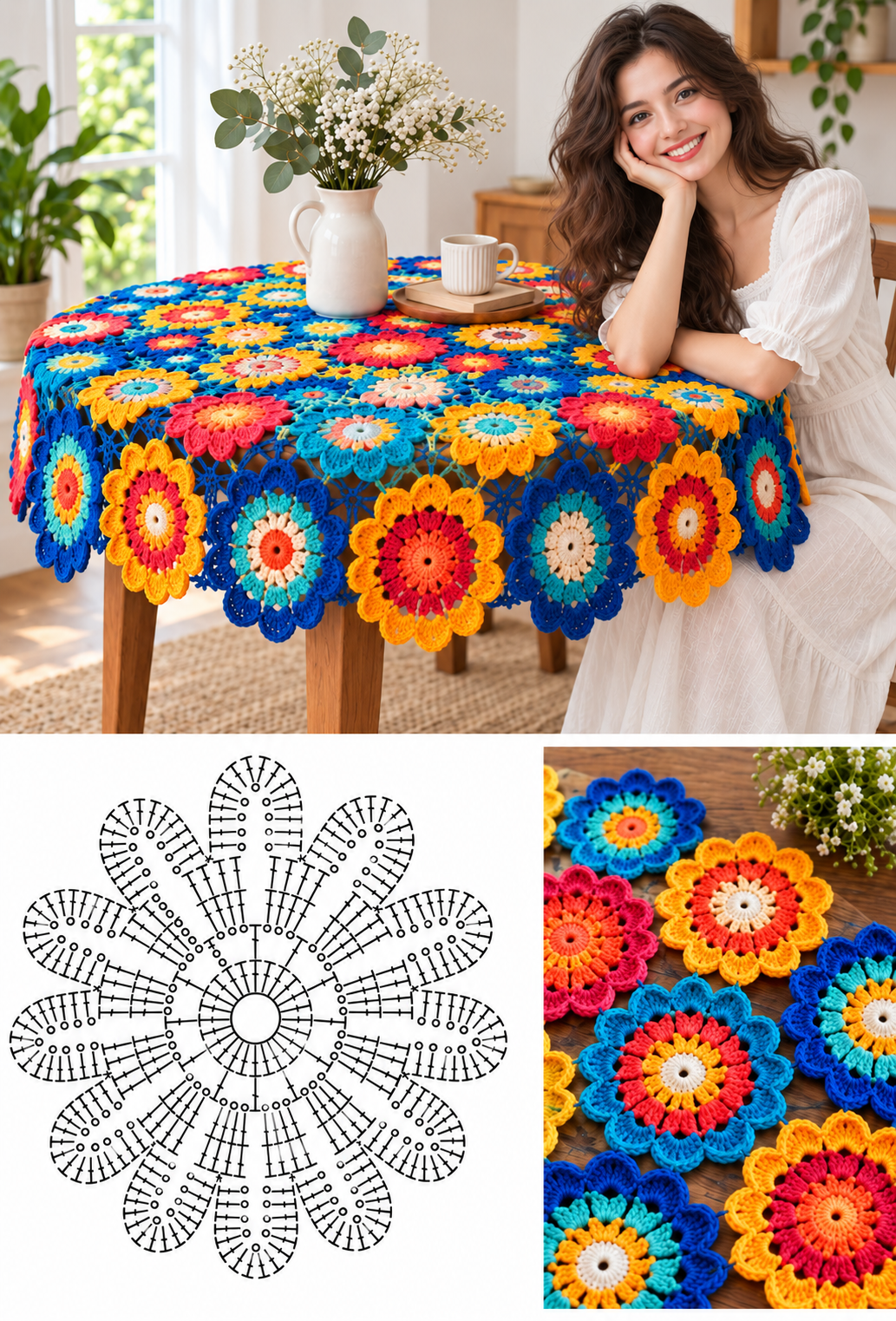
Overview & Design Inspiration
Welcome, fiber friends! There is something utterly magical about watching a vibrant bouquet of yarn blossoms bloom right on your crochet hook. The Crochet flower table runner Pattern is a celebration of color, texture, and creative freedom that will instantly transform any dining space.
Instead of working one endless rectangular slab of fabric, this modular beauty lets you craft individual dimensional flowers one by one. It is a wonderfully satisfying project because every completed blossom feels like a mini victory you can admire before bringing the whole botanical masterpiece together.
Materials & Recommended Supplies
- Yarn: Smooth medium-weight (Worsted / Aran) cotton or cotton blend. Cotton provides crisp stitch definition and the stability needed for crisp table decor.
- Crochet Hook: 4.0 mm (US G/6) to 5.0 mm (US H/8) hook, depending on your personal tension and the yarn weight chosen.
- Notions: Yarn needle for weaving in ends, sharp embroidery scissors, and stitch markers to keep your layout organized.
- Blocking Essentials: Blocking pins, a foam blocking mat, and a spray bottle to prep your motifs for a polished, professional finish.
Essential Techniques & Stitch Highlights
This design relies on standard U.S. crochet terminology, making it wonderfully approachable for adventurous beginners who know their basic stitches. You will weave together foundational techniques like the magic ring, single crochet for sturdy centers, and tall double crochet stitches to build expansive, breath-taking petals.
The magic lies in how these stitches interact. Working into chain spaces creates an airy, delicate lace effect between the petals, ensuring your runner looks light and decorative rather than heavy and stiff on the table.
Construction & Assembly Highlights
Your journey begins at the heart of each motif, starting with a cozy circular center and gradually expanding outward through colorful rounds of increasing height. By playing with dynamic color palettes—think radiant blues, sunny yellows, fiery corals, and creamy neutrals—you create incredible depth within every single flower.
Once you have a flourishing garden of motifs, the real fun begins on a flat surface! You will arrange your pieces, balancing bright tones and alternating colors before joining them securely with a discreet whipstitch or a delicate crochet join to form your stunning final runner.
Customization & Styling Ideas
This pattern is a complete chameleon that adapts effortlessly to your home decor style. Swap the vivid rainbow palette for chic farmhouse neutrals, soothing coastal pastels, or rich autumn jewel tones to match any seasonal tablescape.
Beyond a dining table centerpiece, you can easily alter the width and length to craft a gorgeous coffee table runner, a delicate dresser scarf, or even string individual motifs together into a whimsical springtime window garland.
Pro Tips for Flawless Results
- Make a Test Motif: Always crochet and block one test flower first to check your gauge, experiment with color sequences, and determine the exact size needed for your table.
- Embrace Blocking: Do not skip the blocking stage! Dampening and pinning your motifs flat makes joining them infinitely easier and ensures a wonderfully even, professional layout.
- Weave Neatly: Secure your yarn tails by changing directions at least twice on the wrong side, being careful not to pull so tightly that you distort the petals.
Frequently Asked Questions
Is this pattern beginner-friendly?
Yes, absolutely! While the flowers look intricate, they are constructed using basic stitches like single and double crochet worked in the round. If you can handle simple increasing and changing colors, you are ready to dive in.
How many flowers do I need to make?
That depends entirely on the dimensions of your table! By making a single test motif and measuring its blocked diameter, you can easily calculate how many rows and columns are required for your ideal runner length.
Can I use acrylic yarn instead of cotton?
You can certainly use acrylic if that is what you have on hand, but keep in mind that cotton yarn offers superior stitch definition, a crisper drape, and better durability for everyday table decor.
Watch the Full Step-by-Step Video Tutorial
Prefer visual guidance? Follow along with the complete video tutorial below at your own pace: