
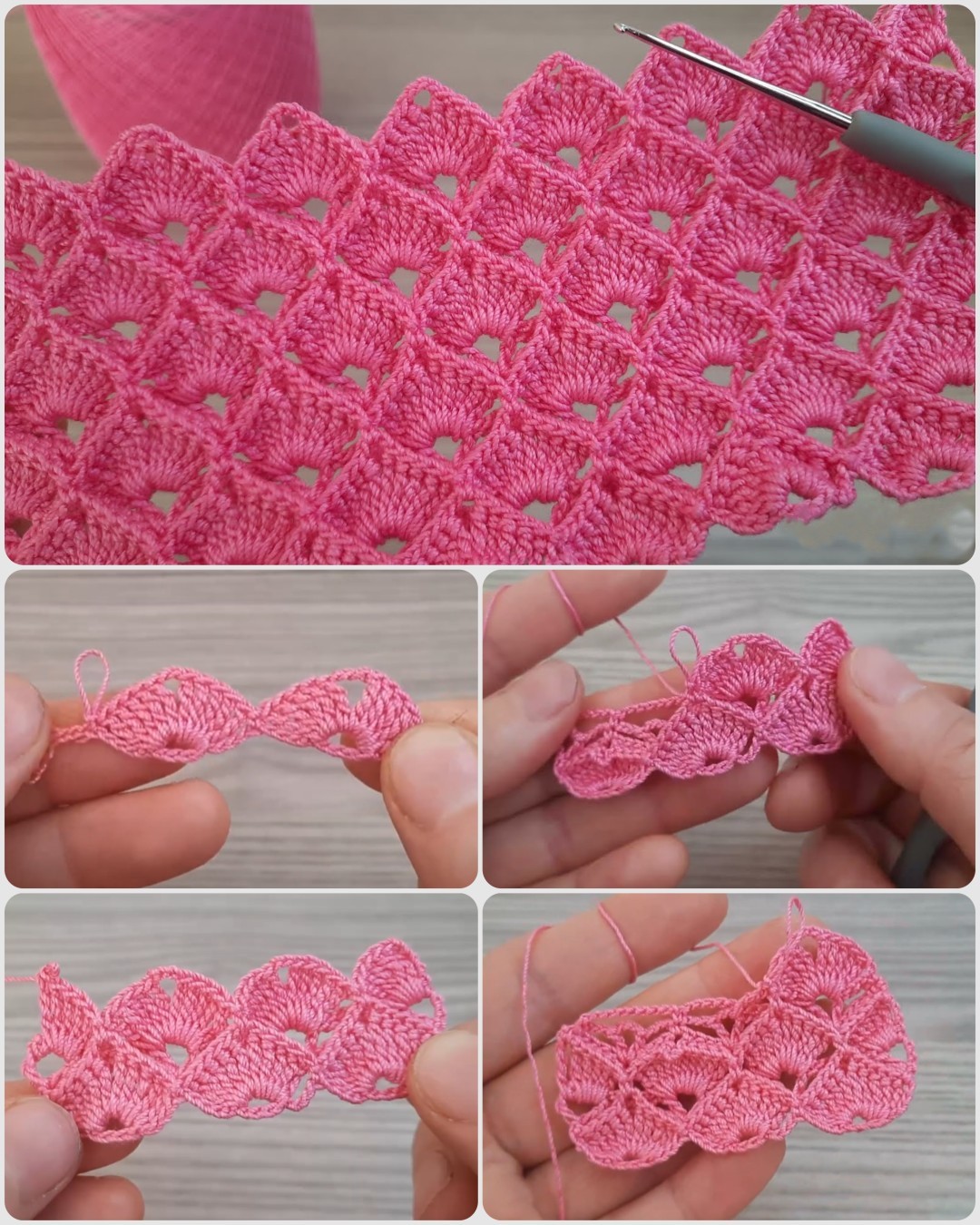
Overview & Design Inspiration
Hello, fellow yarn lovers! If you are looking to add a touch of magic, elegance, and incredible texture to your handmade wardrobe or home, you are in the right place. Today, we are diving deep into the gorgeous world of the Crochet Scale Fan Stitch Pattern, a technique that instantly elevates any project from simple to show-stopping.
Known for its layered, shell-like appearance, this stitch mimics delicate scales or fans that overlap with stunning dimension. While it looks wonderfully complex and high-end, it is built on a foundation of basic stitches that any passionate crocheter can master with just a little patience and love!
Materials & Recommended Supplies
- Yarn: Smooth, medium-weight (Aran or DK) solid yarns work best to clearly showcase the gorgeous scale definition.
- Crochet Hook: 5.0 mm (US H/8) hook, or the appropriate size recommended for your chosen yarn weight.
- Notions: Stitch markers to help keep track of your repeats, a yarn needle for weaving in ends, and a trusty pair of sharp scissors.
- Printable & Video: Grab your downloadable PDF pattern and follow along with our step-by-step video tutorial to make stitching a breeze!
Essential Techniques & Stitch Highlights
The beauty of this pattern lies in its brilliant combination of simplicity and intricate results. By relying on foundational stitches like the chain (ch), double crochet (dc), and slip stitch (sl st), the design builds a rhythmic sequence that quickly becomes intuitive.
The magic happens through strategic stitch placement, where multiple double crochets are worked into the same space to form the signature curved fans. A stabilizing row of single crochets or slip stitches then locks everything into place, enhancing that gorgeous, dimensional layered effect.
Construction & Assembly Highlights
Your journey begins with a foundation chain that meets the specific multiple required for your chosen pattern variation. Next comes the anchor row of double crochets, which sets up a sturdy, even structure for your very first set of fan scales.
As you progress, you will alternate between rows of rich fan shapes and stabilizing rows. Taking your time through these repeating sequences ensures your scales stay aligned, creating a beautifully uniform fabric that drapes like an absolute dream.
Customization & Styling Ideas
This adaptable pattern opens up a universe of creative possibilities for blankets, cozy scarves, and dramatic shawls. You can also bring handmade charm to your living space by crafting textured cushion covers, table runners, or stunning wall hangings.
Experiment with vibrant color changes between rows or within the fans to truly highlight the structural depth of the scales. Whether you are making a soft pastel baby blanket or a bold, statement garment, this stitch adapts wonderfully to your artistic vision.
Pro Tips for Flawless Results
- Maintain Even Tension: Keep a steady, uniform grip on your yarn so every fan scales evenly without looking distorted.
- Count Your Stitches: Take a quick moment at the end of every row to ensure your alignment and stitch counts are spot on.
- Embrace Practice Swatches: Start with a small swatch using a smooth, light-colored yarn to build your confidence before launching into a large project.
Frequently Asked Questions
Is the Crochet Scale Fan Stitch Pattern suitable for beginners?
Yes, absolutely! While it takes a little practice to master the stitch placement and repetition, the pattern itself is built entirely using basic crochet stitches.
Why does my fabric look uneven?
Uneven scales are usually the result of fluctuating tension or missed stitch counts. Practice, patience, and using stitch markers will easily help you conquer this!
Can I use different yarn weights for this project?
Definitely! You can experiment with various yarn weights and hook sizes, though a smooth, medium-weight yarn is always recommended when you are first learning the technique.
Watch the Full Step-by-Step Video Tutorial
Prefer visual guidance? Follow along with the complete video tutorial below at your own pace: