
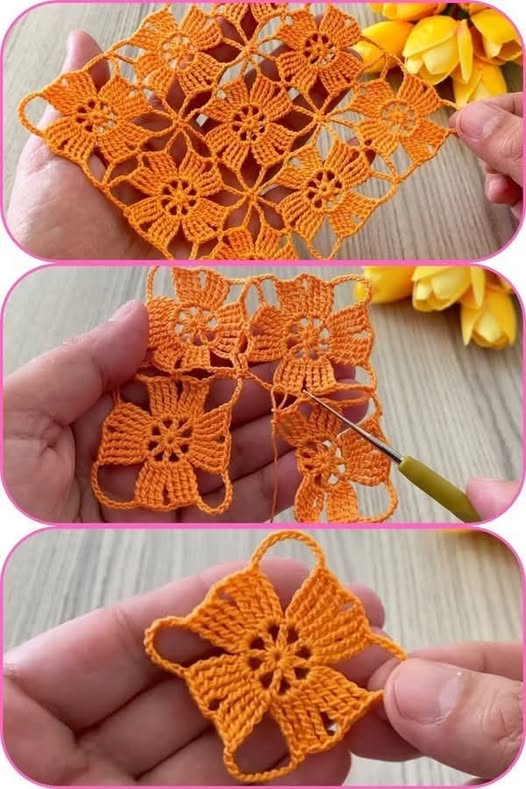
Overview & Design Inspiration
Welcome, fiber friends! If you have ever wanted to unlock endless creative possibilities with your hook, mastering a square motif crochet pattern is your ultimate golden ticket. These charming little building blocks have been cherished for generations because they are endlessly versatile and utterly delightful to make.
Whether you are dreaming of a vibrant heirloom blanket, a cozy pillow cover, or a chic handmade tote, everything starts right here in the center of a single square. Let’s dive into the wonderful world of motifs together and discover how a few simple stitches can transform into breathtaking works of art!
Materials & Recommended Supplies
- Yarn: Medium-weight (Worsted / Aran) yarn is the absolute best starting point. Use cotton for crisp stitch definition in home decor, or acrylic for super-soft and washable blankets and garments.
- Crochet Hook: Match your yarn weight with an appropriately sized hook (typically a 5.0 mm / US H-8 hook for worsted weight) that feels comfortable in your hand.
- Notions: A sharp pair of embroidery scissors for clean cuts and a yarn needle (taproot needle) for weaving in those ends seamlessly.
- Optional: Stitch markers to keep track of your corners, and blocking boards to give your finished squares a crisp, professional finish.
Essential Techniques & Stitch Highlights
The magic of a square motif begins right at the center. Most designs start with a small starting loop or a magical magic ring, building the foundation out in gorgeous, rhythmic layers.
Basic stitches like chains, double crochets, and slip stitches do the heavy lifting here. The secret to transforming a circular start into a sharp, structural square lies in the corner spaces, where extra stitches and chains push the fabric outward into crisp, clean edges.
Construction & Assembly Highlights
Working from the center outward, your motif grows round by round in a soothing, highly repeatable rhythm that is wonderfully easy to memorize. Many crafters love playing with bold color changes between rounds to highlight the striking geometric structure.
Once you have a collection of finished squares, the real fun begins with assembly. Joining these manageable pieces together allows you to watch a massive, intricate masterpiece come to life without ever feeling overwhelmed by a giant work-in-progress.
Customization & Styling Ideas
Once you have mastered the basics, your creativity is the only limit! Mix and match vibrant color palettes for a cheerful patchwork blanket, or stick to a sophisticated neutral palette for modern home decor.
Square motifs are also fantastic for making functional items like statement tote bags, lightweight summer cardigans, or cozy mug rugs and coasters. They make incredible, deeply personal handmade gifts for loved ones.
Pro Tips for Flawless Results
- Maintain Even Tension: Keeping your stitches uniform helps your square maintain its shape and ensures seamless joining later on.
- Don’t Skip Blocking: Wet or steam blocking your finished motifs makes a world of difference, straightening out edges and making assembly a breeze.
- Weave As You Go: Tackling a few yarn tails after finishing each square keeps the final assembly phase relaxing and fun.
Frequently Asked Questions
Is a square motif crochet pattern good for beginners?
Yes, absolutely! They are fantastic for beginners because they usually involve simple, repetitive rounds that let you practice basic stitches without committing to a massive project.
What stitches are commonly used in square motifs?
Most traditional motifs rely on foundational stitches such as chain stitches, double crochets, and slip stitches, sometimes incorporating half double crochets or textured clusters.
Can I use different yarn types in the same motif project?
It is generally recommended to stick to the same yarn fiber and weight for consistency, as mixing different yarn types can lead to uneven tension and warped shapes.
Watch the Full Step-by-Step Video Tutorial
Prefer visual guidance? Follow along with the complete video tutorial below at your own pace: