
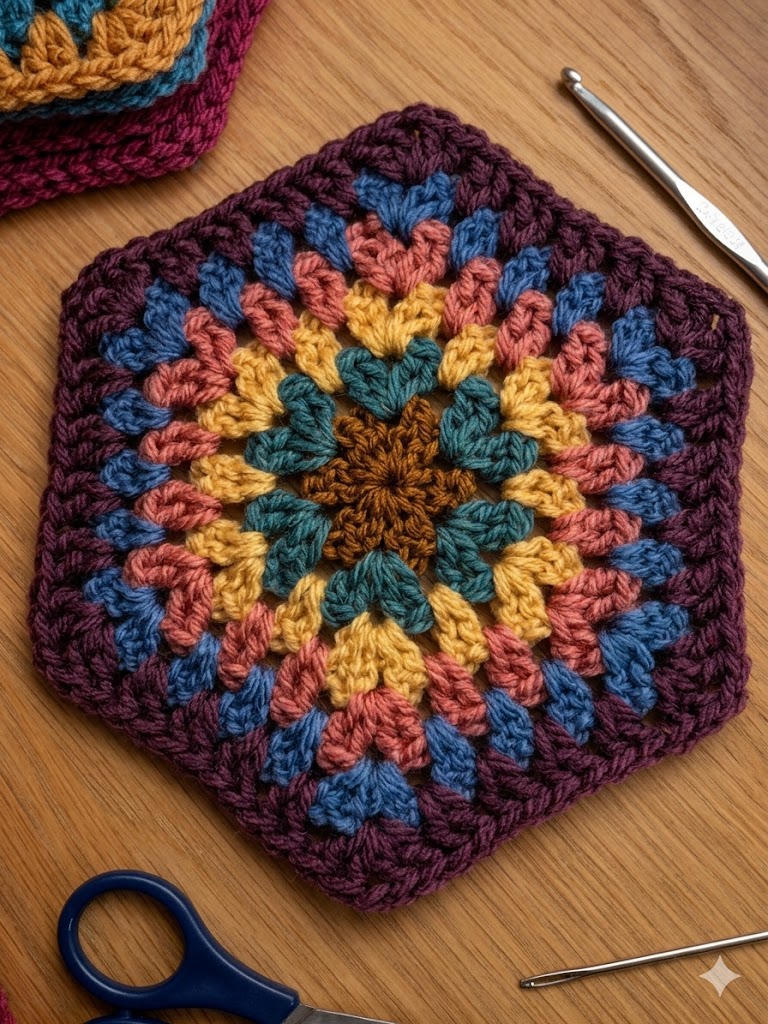
Introduction & Project Overview
Welcome, fellow makers! If you are looking for your next addictive yarn project, crochet hexagons are an absolute must-try.
Unlike traditional squares, these gorgeous six-sided motifs add a stunning geometric flair to blankets, cardigans, and home decor.
Materials & Yarn Suggestions
Before we dive in, let’s gather our favorite supplies to set ourselves up for stitching success. Having the right tools makes all the difference!
- Medium-weight (Worsted) yarn in your favorite colors
- Matching crochet hook (usually US H/5.0mm or G/4.0mm)
- Tapestry needle for weaving in ends
- Sharp embroidery scissors
Technique Breakdown & Step-by-Step Guide
Creating a crochet hexagon is all about balancing the center ring with evenly spaced increases across each round. You will start small in the center and work your way outward in the round.
By placing your increases strategically, your motif naturally transforms from a tight circle into a crisp, six-sided shape. It’s truly magic to watch unfold!
Finishing, Assembly & Styling Ideas
Once you’ve whipped up a colorful stack of hexagons, it’s time to join them into something extraordinary. You can use a seamless slip stitch join for a flat finish, or a textured whip stitch for extra visual interest.
Try laying them out in a vibrant gradient for a modern heirloom blanket, or stitch a few together to make a chic boho pillow cover.
Pro Crafter Tips
Want your hexagons to look completely professional? Always count your stitches at the end of every round to avoid a misshapen edge.
Blocking is your secret weapon! Lightly dampening and pinning your finished motifs helps them lay wonderfully flat before you start joining.
Frequently Asked Questions
What is the best yarn for crochet hexagons?
Smooth, medium-weight cotton or acrylic yarns are ideal because they offer great stitch definition and plenty of structure.
How do I stop my crochet hexagon from curling?
Curling usually happens if your tension is too tight or your increases are uneven. Wet or steam blocking will instantly relax the fibers and flatten them out.
Watch the Full Step-by-Step Video Tutorial
Prefer visual guidance? Follow along with the complete video tutorial below at your own pace: