
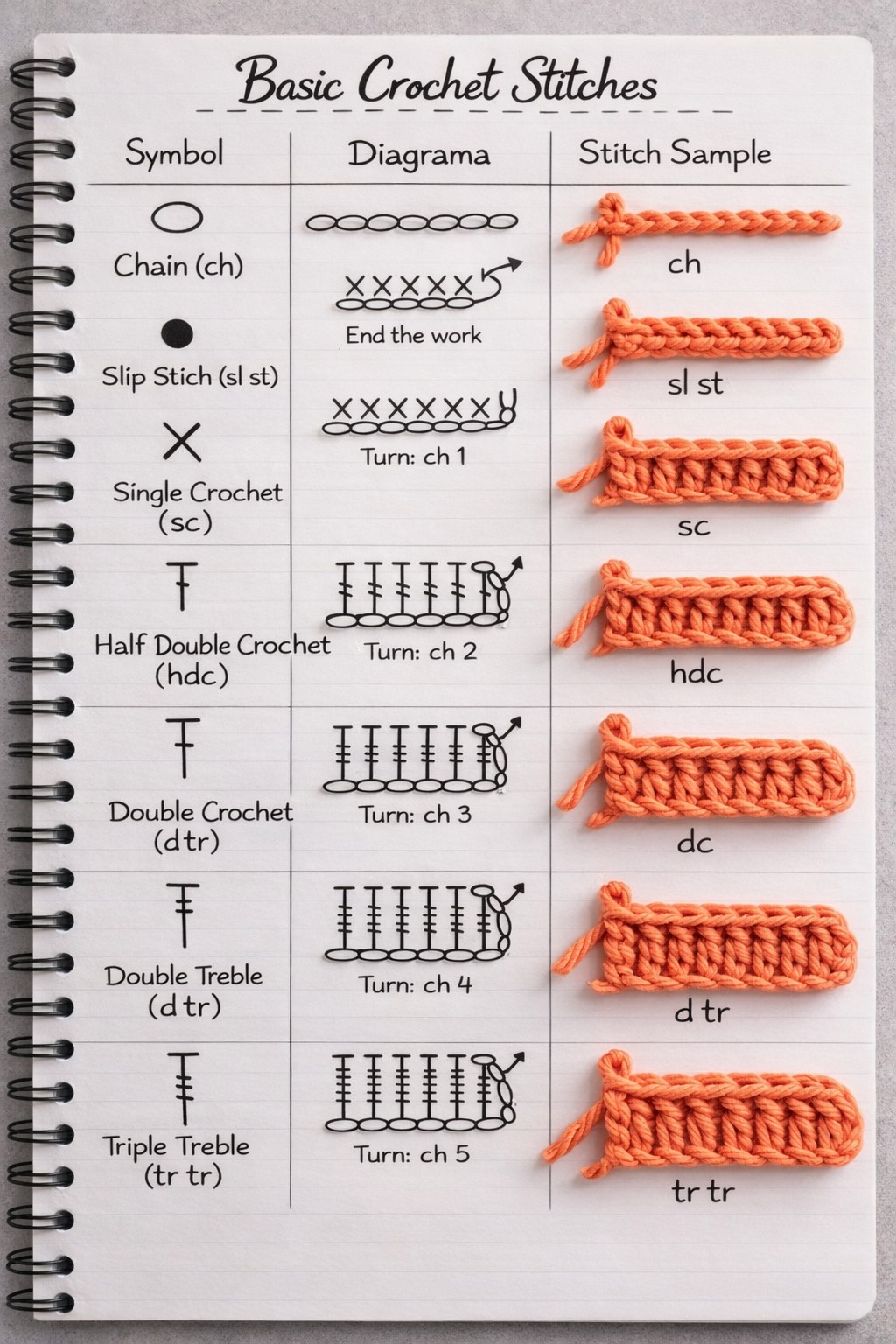
Overview & Design Inspiration
Welcome to your ultimate guide on mastering Basic Crochet Stitches, the true foundation of every handmade masterpiece! Whether you are dreaming of delicate baby blankets, cozy winter scarves, or charming home décor, understanding these core techniques is the secret to unlocking endless creative possibilities.
Crochet is both a deeply relaxing hobby and a practical life skill that anyone can learn with a little patience. By breaking down the fundamentals step by step, we will turn unfamiliar abbreviations into your new best friends so you can approach every future pattern with absolute confidence.
Materials & Recommended Supplies
Before diving into your practice swatches, gathering the right beginner-friendly tools makes all the difference in your learning journey:
- Yarn Weight: Medium (Worsted/Aran weight #4) yarn is the gold standard for learning, offering great stitch definition.
- Fiber Choice: Smooth, tightly-spun wool, cotton, or acrylic blends. Avoid fuzzy mohair or dark novelty yarns initially.
- Color Palette: Light, solid colors (like cream, soft grey, or pastel yellow) so you can easily see your individual stitches.
- Crochet Hook Size: A US H/8 (5.0 mm) or US J/10 (6.0 mm) hook, which pairs wonderfully with worsted-weight yarn.
- Essential Notions: A pair of sharp yarn snips and a couple of locking stitch markers to keep track of your rows.
Essential Techniques & Stitch Highlights
Your journey begins with the humble chain stitch (CH) and slip stitch (SL ST), which together form a flexible base and secure your edges. From there, you will explore the dense, sturdy structure of the single crochet (SC) and the slightly taller, beautifully flexible half double crochet (HDC).
As your confidence grows, you will step into the wonderful heights of the double crochet (DC) and treble crochet (TR). These taller stitches work up quickly, adding gorgeous drape, movement, and an airy texture to garments and lightweight throws without feeling overwhelming.
Construction & Assembly Highlights
Learning these essential stitches is best approached through small, manageable practice swatches rather than large, intimidating projects. By working back and forth in rows, you will naturally build muscle memory and find a comfortable, rhythmic hand motion.
Because every complex lace motif or advanced garment is simply a combination of these core stitches, mastering them now ensures clean edges, balanced tension, and a polished look for all your future handmade creations.
Customization & Styling Ideas
Once you are comfortable with your basic stitches, you can mix and match them to create unique fabric textures and patterns! Alternate single and double crochets for a lovely moss stitch, or use taller treble crochets to craft breezy, openwork summer shawls.
These foundational techniques are also wonderful for crafting practical home items like washcloths and market bags, making your practice sessions both creative and deeply useful for everyday life.
Pro Tips for Flawless Results
- Prioritize Tension: Practice slow, steady movements to keep your yarn tension even, which prevents wonky edges and uneven stitches.
- Count Your Stitches: Make a habit of counting your stitches at the end of every row to avoid accidental increases or decreases.
- Embrace Mistakes: Do not be discouraged by unravelling rows; every experienced crocheter treats fixing errors as a valuable learning opportunity.
- Choose Clear Light: Always practice in a well-lit space or use a crafting lamp so you can easily spot your front and back loops.
Frequently Asked Questions
What are the most important Basic Crochet Stitches for beginners?
The absolute must-know stitches are the chain stitch, slip stitch, single crochet, half double crochet, double crochet, and treble crochet. Together, they form the structural base of almost every crochet pattern you will ever encounter.
How long does it take to learn Basic Crochet Stitches?
It varies from person to person, but with regular, short practice sessions, most beginners feel comfortable with the core fundamentals within a few days to a couple of weeks.
Why do my crochet stitches keep looking uneven?
Uneven stitches are almost always caused by inconsistent tension while holding your working yarn. Regular practice and paying close attention to your hand rhythm will naturally smooth out your work over time.
Watch the Full Step-by-Step Video Tutorial
Prefer visual guidance? Follow along with the complete video tutorial below at your own pace: