
Overview & Design Inspiration
Welcome, fellow yarn lovers! Have you ever stumbled across a breathtaking crochet pattern from another country, only to feel completely mystified by the grid of little drawings instead of familiar written words?
That is where our Crochet Symbol Charts Explained Tutorial comes to the rescue, transforming a daunting visual puzzle into a universal language of creativity that will forever change how you approach your craft!
Materials & Recommended Supplies
- Practice Yarn: A smooth, light-colored worsted weight yarn (like a #4 medium acrylic or cotton) to easily see your stitch placement.
- Crochet Hook: An ergonomic crochet hook sized appropriately for your yarn (such as a US H/8 or 5.0 mm hook).
- Essential Notions: Locking stitch markers to track your rows, a tapestry needle for weaving in ends, and a pair of sharp snips.
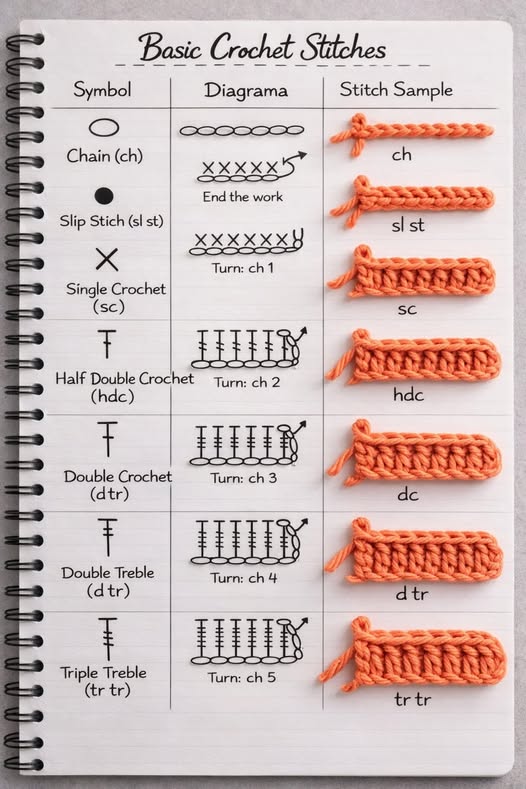
- Visual Reference: A printed crochet symbol chart or diagram to practice your new reading skills alongside this guide.
Essential Techniques & Stitch Highlights
Crochet symbol charts rely on standardized, visual glyphs that actually resemble the physical shape of the stitches they represent. For instance, a simple chain stitch is drawn as a tiny oval, while a taller double crochet features a crossbar.
By mastering these fundamental symbols—from foundational crosses for single crochets to multi-barred towers for trebles—you unlock the secret to reading intricate lace, complex motifs, and international designs without ever needing a translation dictionary.
Construction & Assembly Highlights
Reading a chart is all about following a clear roadmap, whether your project works in flat rows or unfolds outward from a central magic ring. Flat charts are typically read from the bottom up, alternating reading directions from right to left on odd rows and left to right on even rows.
Circular charts guide you round by round in a continuous spiral or joined sequence, allowing you to visualize the entire architecture of your project at a single glance before you even make your first slip knot.
Customization & Styling Ideas
Once you feel comfortable decoding simple charts, a whole new world of design possibilities opens right up before your eyes. You can easily adapt pattern symbols to create custom granny squares, modify existing lacework, or even design entirely original heirloom blankets and garments.
Sharing charted patterns across international borders becomes an absolute breeze, letting you connect with a global community of makers who speak the universal language of crochet.
Pro Tips for Flawless Results
- Start Simple: Begin your chart-reading journey with basic motifs or beginner-friendly squares before tackling advanced lace patterns.
- Keep a Legend Handy: Always review the designer’s symbol key before starting to ensure you catch any unique specialty stitches like popcorns or shells.
- Count Frequently: Use stitch markers and regularly check your chart to catch and correct mistakes early on.
- Practice Off-Duty: Spend a few minutes studying charts even when you aren’t holding a hook to train your eyes to recognize pattern repeats instantly.
Frequently Asked Questions
What is a crochet symbol chart?
A crochet symbol chart is a visual diagram that uses standardized graphical symbols to represent specific crochet stitches and show their exact placement within a pattern layout.
Are crochet symbols the same worldwide?
Yes! Most crochet symbols follow internationally recognized standards, making them universally understandable across different countries, cultures, and languages.
Can absolute beginners learn how to read crochet charts?
Absolutely. By starting with basic charts and practicing alongside a symbol reference guide, beginners can quickly build confidence and master visual pattern reading.
Watch the Full Step-by-Step Video Tutorial
Prefer visual guidance? Follow along with the complete video tutorial below at your own pace: