
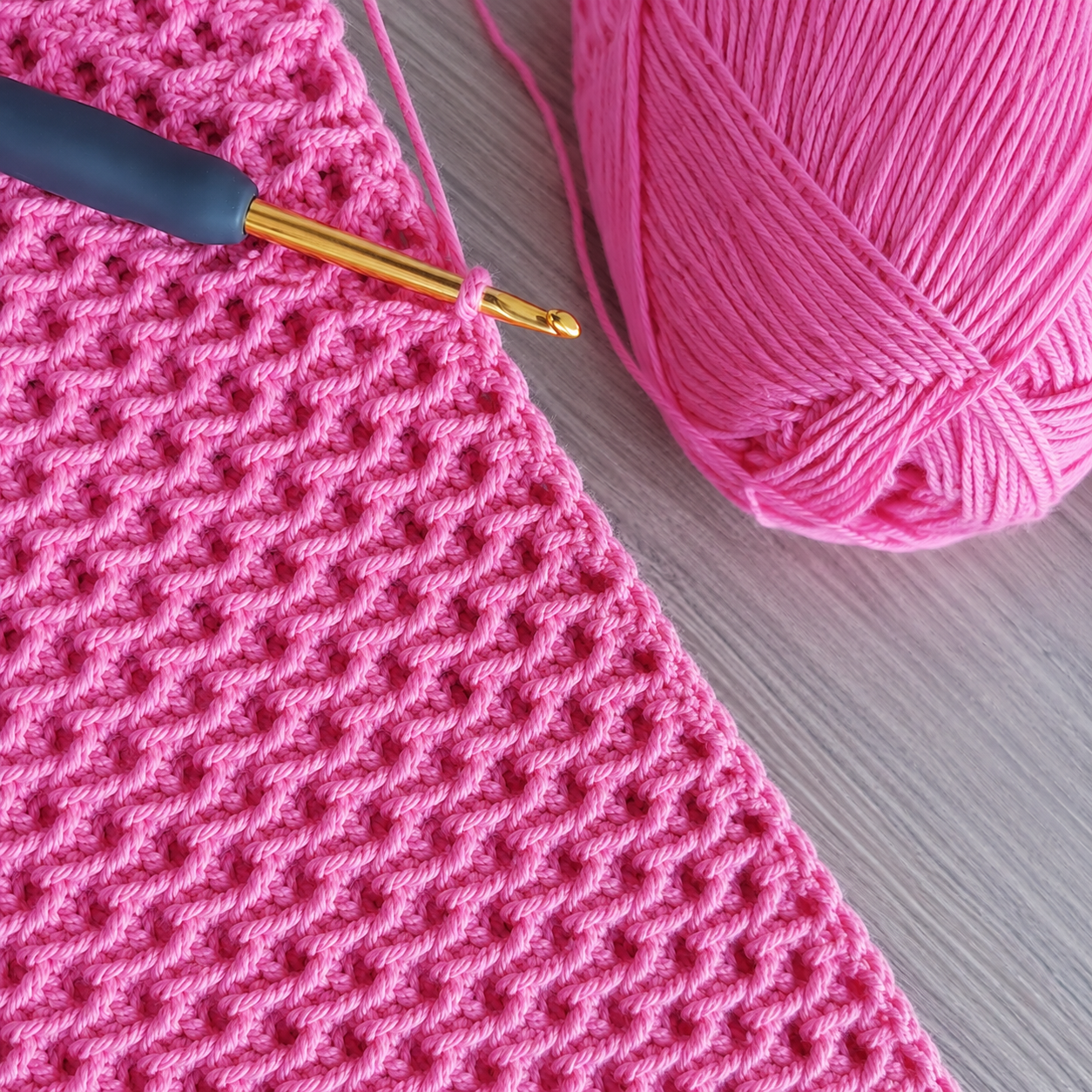
Overview & Design Inspiration
Welcome, my crafty friends! If you have been searching for a new technique to elevate your handmade wardrobe and home décor, the Crochet Tunisian Stitch Pattern is your golden ticket. This mesmerizing craft artfully bridges the gap between traditional crochet and knitting, creating fabrics that are structurally sound, luxuriously textured, and deeply satisfying to make.
Whether you are a curious beginner looking for your next creative challenge or an experienced maker wanting to expand your repertoire, diving into Tunisian crochet will completely transform your crafting flow. The rhythmic loading and working off of stitches brings a calming, meditative pace to your hook, resulting in heirloom-quality pieces you will treasure for years.
Materials & Recommended Supplies
- Yarn: Smooth, non-split yarns work best. Choose worsted-weight acrylics, wool blends, or cotton for your first few adventures to ensure ultimate stitch definition.
- Hooks: Tunisian crochet hooks are longer than regular hooks to hold multiple loops. Sizes typically range from 5.5 mm (US I/9) to 8.0 mm (US L/11) depending on your yarn choice.
- Cables: Extension cables attached to your Tunisian hook are essential if you are planning to make larger projects like blankets or oversized wraps.
- Notions: Tapestry needles for weaving in ends, locking stitch markers to keep track of your rows, and blocking mats with pins to achieve professional edges.
Essential Techniques & Stitch Highlights
What makes a Crochet Tunisian Stitch Pattern so uniquely captivating is its two-pass system. Instead of completing a single stitch at a time, you load multiple loops onto your hook during the forward pass, and then work them off sequentially during the return pass.
By mastering foundational favorites like the Tunisian Simple Stitch, Knit Stitch, and Purl Stitch, you unlock completely distinct textures. These foundational maneuvers create dense, cozy fabrics that mimic knitted stockinette or ribbing while retaining the wonderful stability and rich depth characteristic of advanced crochet artistry.
Construction & Assembly Highlights
Constructing a Tunisian crochet project is a wonderfully straightforward journey, though it requires a mindful approach to tension and shaping. Because the fabric naturally tends to curl at the edges—especially with the basic Tunisian Simple Stitch—incorporating a supportive border or using a slightly larger hook keeps everything beautifully flat.
Once your main body panels or accessories are worked to your desired length, finishing techniques like blocking play a star role. Wet or steam blocking relaxes the fibers, straightens out your outer edges, and allows the gorgeous structural definition of your chosen Tunisian stitches to truly shine.
Customization & Styling Ideas
The design possibilities with Tunisian crochet are virtually endless, stretching from cozy home accents to stunning wearable art. You can easily adapt your yarn weight and hook size to craft everything from thick, insulating winter blankets and structured everyday tote bags to lightweight, drapey shawls for breezy spring evenings.
Play around with vibrant color-blocking, subtle gradient yarns, or geometric stitch combinations to make each creation uniquely yours. These handmade pieces also make deeply personal, show-stopping gifts for housewarmings, holidays, and birthdays that will leave your loved ones in absolute awe.
Pro Tips for Flawless Results
- Watch Your Tension: Pay special attention to your return pass; keeping it relaxed ensures your fabric stays flexible and never stiff.
- Count Regularly: Because multiple loops live on your hook at once, take a quick second to count your stitches at the end of rows to avoid accidental increases or decreases.
- Embrace Blocking: Never skip the blocking stage! It completely transforms the drape, squares up your corners, and hides minor tension hiccups.
- Invest in Ergonomics: Since holding multiple stitches can tire out your hands, using an ergonomic Tunisian hook makes long crafting sessions an absolute breeze.
Frequently Asked Questions
Why does my Tunisian crochet project curl at the edges?
Curling is a natural characteristic of many basic Tunisian stitches, particularly the Tunisian Simple Stitch, due to the directional pull of the yarn. You can easily minimize this by using a slightly larger hook, maintaining a relaxed tension, working a supportive border, or thoroughly blocking your finished piece.
Do I need a special Tunisian hook, or can I use a regular crochet hook?
For small swatches or narrow items like bookmarks and headbands, you can sometimes use a long regular hook. However, for most projects, you will need a dedicated Tunisian hook or a cabled Tunisian hook system to accommodate holding all your active stitches at the same time without them falling off.
Is Tunisian crochet difficult for absolute beginners?
Not at all! While it looks intricate, the basic mechanics are surprisingly easy to pick up. Starting with small, manageable projects like dishcloths, scarves, or mug rugs allows you to build confidence, master the forward and return passes, and watch your skills flourish in no time.
Watch the Full Step-by-Step Video Tutorial
Prefer visual guidance? Follow along with the complete video tutorial below at your own pace: