
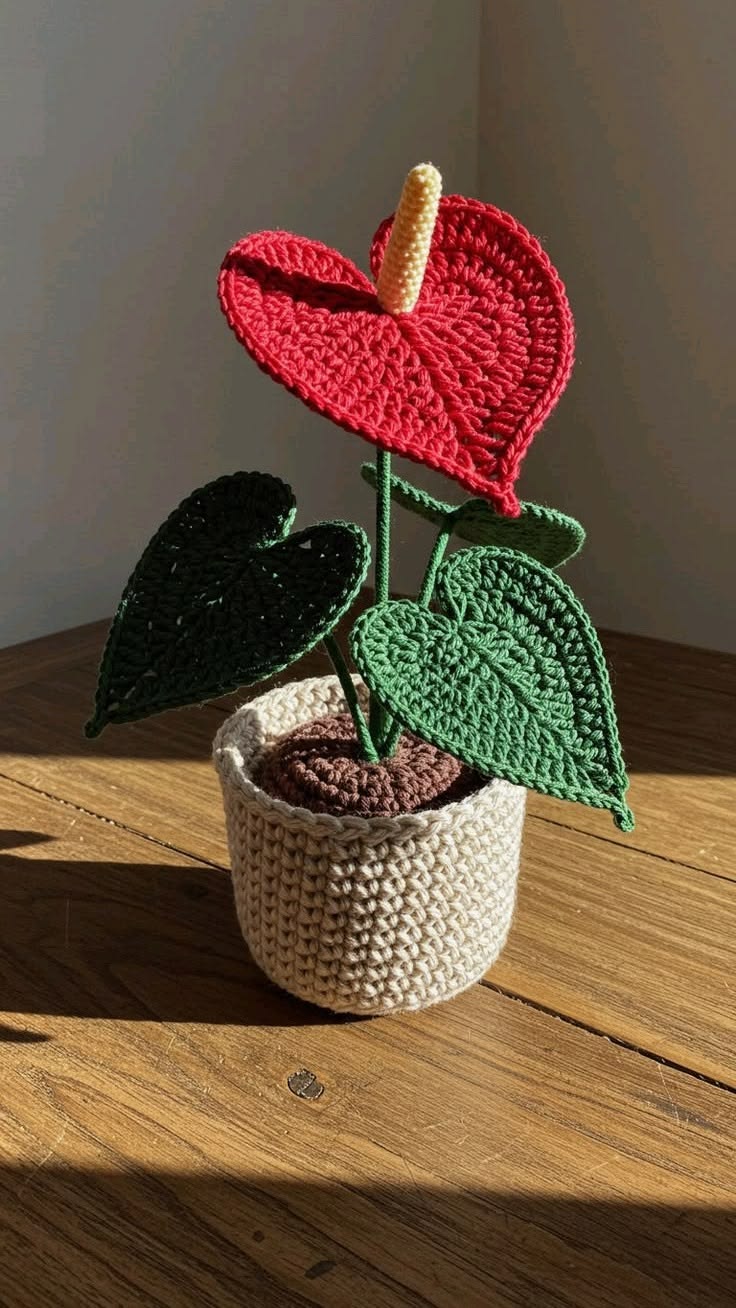
Overview & Design Inspiration
Welcome, fiber friends, to your next favorite botanical make! There is something utterly magical about bringing the vibrant, lush elegance of tropical plants into our homes, especially when we can craft them with our own two hands using our favorite yarn.
Inspired by the striking heart-shaped leaves and sculptural grace of the real Anthurium plant, this pattern combines delicate stitches, gorgeous color palettes, and clever shaping. Whether you are expanding your handmade botanical collection or looking for a stunning statement piece, this project is an absolute joy to stitch.
Materials & Recommended Supplies
Gathering your supplies is the official start of the creative journey! To achieve that crisp, botanical look with beautifully defined veins and edges, smooth fibers work best.
- Yarn: DK or light worsted-weight cotton yarn in two or three complementary colors for that signature contrasting border and leaf body.
- Crochet Hook: 3.0 mm to 3.5 mm hook, chosen to match your personal tension and keep your stitches nice and structured.
- Stitch Markers: Essential for keeping track of your shaping points and rounds.
- Tapestry Needle: For weaving in all your ends with a professional finish.
- Scissors: Sharp embroidery or craft scissors for clean yarn trimming.
- Floral Wire & Tape (Optional): Perfect for supporting stems and leaves so you can pose your arrangement just right.
- Display Vessel: A charming vase, basket, or handmade crochet pot to showcase your finished masterpiece.
Essential Techniques & Stitch Highlights
This pattern is a wonderful playground for familiar US crochet stitches, utilizing everything from humble chain stitches to lofty treble crochets. Because the design relies heavily on varying heights, you will use short stitches like single and half double crochets near the pointed tips and narrow bases to maintain that gorgeous, crisp contour.
As you work outward, transitioning into double and treble crochets provides the lovely broad sweep needed for the upper leaf lobes. Raised surface textures and clever color changes accentuate the natural ribbing of the plant, turning simple yarn into a hyper-realistic botanical work of art.
Construction & Assembly Highlights
Building your anthurium starts right at the center foundation chain, from which the entire leaf gracefully expands. By working in carefully planned rounds around your initial chain, you gradually build the width of the leaf body before forming those signature heart-shaped upper lobes.
Once your leaves and optional flower spikes are crocheted to perfection, assembly is all about personalization! You can insert floral wire down the central spines to make them completely poseable, wrap your stems with floral tape, and arrange your finished foliage at varying heights inside your chosen container for a lush, full display.
Customization & Styling Ideas
One of the absolute best parts of this project is its incredible versatility. While botanical green is classic, you can play with stunning modern colorways like cream and turquoise, peach and coral, or dramatic black and ivory!
Mix and match different leaf sizes to create depth in your arrangement. They make breathtaking, zero-maintenance centerpieces for dining tables, cheerful accents for office desks, and unforgettable handmade gifts for the plant lovers in your life.
Pro Tips for Flawless Results
- Maintain Even Tension: Keep your foundation chains and stitches consistent so your leaves lay flat without curling at the edges.
- Embrace Blocking: A light steam or wet blocking session will relax your cotton stitches and give your leaf edges that crisp, professional definition.
- Secure Your Wire: If using floral wire for stems, anchor it securely during assembly to ensure your leaves hold their majestic poses for years to come.
Frequently Asked Questions
Is this pattern beginner-friendly?
Yes, absolutely! If you are comfortable with basic US terminology and standard stitches like single and double crochet, you can easily tackle this project by breaking it down one leaf at a time.
Do I have to use cotton yarn?
While cotton yarn is recommended for its superior stitch definition and structured drape, you can certainly experiment with acrylic blends if you prefer a softer, more flexible finished leaf.
How do I care for my finished crochet anthurium?
The best part about botanical crochet is that it requires zero watering, sunlight, or maintenance! Simply dust your arrangement gently with a soft brush or a cool hairdryer on a low setting whenever needed.
Watch the Full Step-by-Step Video Tutorial
Prefer visual guidance? Follow along with the complete video tutorial below at your own pace: