
The Crochet Rose Flower 3D Pattern is a wonderful way to create realistic, textured flowers that bring handmade beauty to decorations, accessories, gifts, and home décor. With its layered petals, delicate curves, and three-dimensional appearance, this crochet rose can transform simple yarn into an elegant flower that looks beautiful from every angle.
Whether you are a beginner learning basic crochet stitches or an experienced crafter looking for a creative project, making a three-dimensional rose is an enjoyable way to explore the possibilities of crochet. By choosing the right yarn, hook, and color combination, you can create flowers that reflect your personal style and suit many different occasions.
One of the most appealing features of the Crochet Rose Flower 3D Pattern is its versatility. Unlike flat crochet motifs, a three-dimensional rose has petals that curl, overlap, and rise from the center, creating depth and a more natural floral shape. You can make a small rose for a hair clip, a medium flower for a brooch, or a larger bloom for a decorative bouquet. Red, pink, white, yellow, and purple yarn are popular choices, but handmade flowers also look attractive in unusual shades such as burgundy, cream, peach, or dusty blue. Each color creates a different mood, allowing you to personalize your finished project for birthdays, weddings, anniversaries, seasonal decorations, and other special moments.
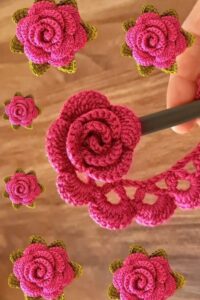
Learning how to crochet a 3D rose does not require expensive materials or complicated equipment. Most designs use familiar stitches, including chain stitches, slip stitches, single crochet, half double crochet, and double crochet. The main skill is arranging the stitches so the crocheted strip develops curved sections that can be rolled into petals. Once you understand this construction method, you can experiment with different petal sizes, tighter or looser centers, and additional layers to achieve your preferred appearance. This guide explains the materials, basic techniques, assembly process, finishing ideas, and frequently asked questions to help you create a beautiful Crochet Rose Flower 3D Pattern with confidence.
Materials and Basic Techniques for a Crochet Rose Flower 3D Pattern
Before beginning your Crochet Rose Flower 3D Pattern, gather the materials you need and prepare a comfortable workspace. Having everything within reach makes the project easier to follow and helps you concentrate on the shape of the petals. You do not need a large collection of supplies, especially if you are making a simple rose for the first time. A small amount of yarn, a suitable crochet hook, scissors, and a yarn needle are generally enough to create the flower.
Choose a yarn that holds its shape without making the petals too stiff. Cotton yarn creates defined stitches and a neat finish, while acrylic yarn is widely available in many colors and is easy to work with. Smooth yarn is usually the best choice for beginners because the stitches remain visible as you crochet. Very fluffy or textured yarn can hide the details of the petals, making it more difficult to identify individual stitches during assembly.
The crochet hook should match the yarn weight and your personal tension. A slightly smaller hook than the one recommended on the yarn label may produce firmer petals, which can help the rose maintain its three-dimensional structure. However, avoid choosing a hook so small that the yarn becomes difficult to work with. If the stitches feel uncomfortable or the fabric becomes excessively stiff, try a different hook size and compare the results.
You should also understand the basic stitches used in many 3D crochet rose patterns. A chain stitch creates the foundation, while a slip stitch can join sections or move the yarn across a small area without adding much height. Single crochet creates compact stitches, and half double crochet and double crochet add height to the petals. Combining stitches of different heights along a foundation chain creates the curves that make the flower look dimensional.
For a beginner-friendly design, start with a foundation chain long enough to form several petals. Work a sequence of stitches into the chain, following a repeating arrangement of taller stitches and connecting stitches. A common approach is to place single crochet stitches in selected spaces and use taller stitches in others to form rounded or scalloped sections. The exact stitch count depends on the pattern and the size of the flower you want to create.
Before rolling the finished strip, take a moment to inspect the petal shapes. The taller stitch sections should create visible curves, while the connecting sections help the strip bend naturally. If your petals appear too flat, you may need to adjust your stitch height or tension. If they curl excessively, try relaxing your tension slightly. Practicing with a short sample first can help you understand how your chosen yarn behaves and make the final Crochet Rose Flower 3D Pattern easier to assemble.
Step-by-Step Instructions for Creating Three-Dimensional Crochet Rose Petals
THE BEST CROCHET PATTERNS
➔
Begin your Crochet Rose Flower 3D Pattern by making a foundation chain. The number of chains determines the approximate length of the finished petal strip, so a longer chain generally creates a larger rose with more petals. For your first attempt, choose a moderate length rather than trying to create an oversized flower immediately. A manageable strip is easier to roll evenly and secure without becoming bulky in the center.
Next, create the first row of stitches according to your chosen design. You might use a sequence of single crochet, half double crochet, and double crochet stitches to establish the foundation for the petals. Some patterns place several tall stitches in one chain space to create a rounded scallop, while others use groups of stitches separated by smaller connecting stitches. Follow a consistent sequence so the petals form a repeating pattern along the strip.
As you continue working, pay attention to the spaces between the taller stitch groups. These sections help the strip bend and provide natural points for arranging the petals during assembly. If the stitch pattern is repeated evenly, the finished flower will usually have a balanced appearance. Counting your stitch groups can prevent accidental changes in the petal size and reduce the need to unravel completed rows.
When the strip is long enough, fasten off the yarn while leaving a generous tail for sewing. This tail will be used to secure the rose, so avoid cutting it too short. Lay the strip on a flat surface and examine the scalloped edge. You should be able to identify the individual petal sections before you begin rolling them together. Gently shaping the strip with your fingers can make the assembly process easier.
To form the rose, start at one end of the strip and roll it inward. Keep the lower edge of the strip relatively aligned while allowing the upper petal edges to curve outward. This arrangement creates a compact center surrounded by progressively larger petals. Avoid rolling the strip too tightly, because an extremely compressed center can make the flower look like a small knot rather than an open rose. You can loosen or tighten the roll until you achieve a shape you like.
Once the rose looks balanced, use the yarn tail and a yarn needle to sew through the base of the flower. Catch several layers of the rolled strip with each stitch so the petals remain in place. Turn the flower over periodically to check that the base is secure and that the petals are not slipping apart. After fastening the structure, gently spread the outer petals with your fingers. This final shaping step gives the Crochet Rose Flower 3D Pattern its characteristic depth and makes the individual layers more visible.
Finishing, Customization, and Creative Uses for Your Crochet Rose Flower
Finishing is an important part of creating a polished Crochet Rose Flower 3D Pattern. After sewing the petals together, inspect the underside for loose ends, uneven sections, or gaps that could cause the flower to lose its shape. Weave the yarn tails securely into the stitches, keeping them away from the visible petal surfaces. If necessary, add a few discreet stitches to strengthen the base or hold an outer petal in the position you prefer.
Color selection can dramatically change the appearance of your crochet rose. Classic red creates a romantic look, while soft pink and peach shades produce a delicate, gentle effect. White and ivory flowers work beautifully for elegant decorations, and yellow or orange roses can brighten spring and summer projects. You can also combine two colors by using one shade for the center and another for the outer petals. For a more subtle effect, choose two yarn colors from the same color family.
Adding leaves is another way to make the flower look more complete. Green yarn can be used to crochet small leaves that sit beneath the rose, creating a contrast with the petals. You can attach one or two leaves to the base with a yarn needle or crochet them directly onto a short chain stem. If you plan to use the flower in a bouquet, make several roses with slightly different sizes so the arrangement appears more natural and visually interesting.
A finished 3D crochet rose flower can be used in many handmade projects. Attach a small rose to a hair clip, headband, or brooch to create a personalized accessory. Sew a larger flower onto a cushion cover, decorative bag, or handmade pouch. Crochet roses can also embellish gift wrapping, table decorations, wreaths, and handmade greeting cards. When attaching a flower to an item that will be handled frequently, make sure the base is securely sewn rather than relying on a single loose thread.
These flowers are also suitable for creating thoughtful handmade gifts. A bouquet of crochet roses can be prepared in advance and customized to match a recipient’s favorite colors. Unlike fresh flowers, yarn roses do not wilt, and they can be stored and enjoyed for a long time when kept clean and dry. You can arrange them in a decorative container, combine them with crocheted leaves, or use them as part of a larger handmade gift. For gifts intended for young children, avoid detachable small parts and follow appropriate age-related safety precautions.
Careful storage helps preserve the three-dimensional shape of your finished flower. Keep crochet roses away from excessive moisture, direct heat, and prolonged sunlight, which may affect the yarn color or texture. If dust accumulates, use a soft brush or follow the yarn manufacturer’s cleaning instructions. Avoid crushing the petals under heavy objects, and store delicate flowers in a box where they can retain their shape. With simple care, your Crochet Rose Flower 3D Pattern can remain an attractive part of your handmade collection for years.
Frequently Asked Questions About the Crochet Rose Flower 3D Pattern
1. Is the Crochet Rose Flower 3D Pattern suitable for beginners?
Yes. Many Crochet Rose Flower 3D Pattern designs are suitable for beginners who already understand basic stitches such as chain, slip stitch, single crochet, and double crochet. The main challenge is rolling and securing the petal strip so that the flower maintains its shape. Beginners can make the process easier by choosing a simple pattern, using smooth yarn, and practicing with a small flower before attempting a larger design.
2. What yarn is best for making a three-dimensional crochet rose?
Cotton and acrylic yarn are both useful choices. Cotton provides clear stitch definition and can help the petals maintain a neat appearance. Acrylic yarn offers a wide range of colors and is often easy to find at craft stores. The best option depends on the intended use of the flower, the texture you prefer, and how firmly you want the petals to hold their shape.
3. What crochet hook size should I use?
The appropriate hook size depends on the yarn weight and your tension. Check the yarn label for its recommended hook size, then make a small sample if you are unsure. A slightly smaller hook may create firmer stitches, but the stitches should remain comfortable to work. If the fabric is too tight to manipulate during assembly, try a larger hook.
4. How do I make my crochet rose look more realistic?
To create a more realistic appearance, focus on the shape and arrangement of the petals. Roll the center tightly enough to create a defined core, then allow the outer petals to open gradually. Use your fingers to adjust individual curves after sewing the base. Choosing colors inspired by natural roses and adding green leaves can also enhance the finished flower.
5. Why does my crochet rose look flat instead of three-dimensional?
A flat-looking rose may result from using short stitches throughout the strip, rolling the petals too tightly, or failing to shape the outer layers. Review the stitch sequence to ensure that the pattern includes enough height variation to create scalloped petals. During assembly, keep the base secure while allowing the upper edges to spread outward. Gentle shaping after sewing can improve the flower’s depth.
6. How can I stop the crochet rose from unraveling?
The most reliable method is to secure the base with a yarn needle and several stitches that pass through multiple layers of the rolled strip. Fasten the yarn securely and weave the tail into the underside. If the flower will be attached to clothing, a bag, or another frequently handled object, sew it firmly to the item as well. Check the attachment periodically for signs of loosening.
7. Can I make a larger or smaller crochet rose?
Yes. You can change the size by adjusting the foundation chain, the number of petal groups, the yarn weight, and the crochet hook. A shorter strip usually produces a smaller flower, while a longer strip allows more layers to form. Remember that changing the yarn weight or hook size can also affect the final proportions, so experiment with a sample before making several flowers for the same project.
8. Can I use a 3D crochet rose for home décor and accessories?
Absolutely. These flowers work well on decorative cushions, bags, headbands, brooches, gift decorations, wreaths, and handmade bouquets. Choose the size and yarn according to the intended use. For frequently handled accessories, secure the flower carefully. For home décor, you can combine several roses with crocheted leaves to create a coordinated arrangement.
9. How do I wash and maintain a crochet rose flower?
Cleaning instructions depend on the yarn used. Check the manufacturer’s care recommendations before washing the flower. Some yarns may tolerate gentle handwashing, while others require more careful treatment. Avoid twisting or pulling the petals, and reshape the flower gently after cleaning if the yarn permits it. Make sure the rose dries completely before storing it.
10. Can I sell items made with a Crochet Rose Flower 3D Pattern?
Handmade crochet roses can be incorporated into products for sale, including accessories, decorations, and gift arrangements. If you plan to sell finished items, consider the time required to make each flower, the cost of materials, and the quality of the final construction. Also, check any usage terms associated with a specific pattern if you followed someone else’s instructions. Creating your own variations and keeping accurate records of production costs can help you develop a consistent handmade collection.
Conclusion
The Crochet Rose Flower 3D Pattern is a versatile and rewarding project that combines simple crochet stitches with creative shaping to produce a beautiful three-dimensional flower. By selecting suitable yarn and a comfortable hook, working the petal strip carefully, and securing the rolled layers with strong stitches, you can create roses that look attractive and hold their shape. The same basic technique can be adapted to different sizes, colors, and decorative styles, making it useful for both beginners and experienced crocheters.
Throughout this guide, we explored the materials needed, the basic stitches used to form petals, the process of rolling and securing the flower, and several ways to customize and care for the finished rose. We also answered common questions about yarn selection, flower size, realistic shaping, durability, and creative uses. With patience and practice, you can turn a small amount of yarn into a handmade decoration suitable for gifts, accessories, and home décor.
Now it is your turn to pick your favorite yarn color and try making your own Crochet Rose Flower 3D Pattern. Every flower offers an opportunity to experiment, improve your technique, and develop a personal style. If you have already made a crochet rose, please leave your honest opinion in the comments and share any suggestions, useful tips, or creative ideas that could help other readers. Your experience and feedback can inspire more people to discover the joy of crochet and create beautiful handmade flowers of their own.